Shipping products to Amazon FBA is not just "book a shipment and hope it arrives." For international sellers shipping from China to Amazon FBA in the US or Europe, the inbound workflow has a few make-or-break moments: packaging and labels, box content accuracy, customs importer setup, and the final delivery appointment. This guide walks you through the real step-by-step process from finished production to FBA check-in, with practical timelines, cost drivers, and the mistakes that most often cause delays or refusals.
Quick answers
- Typical steps: prep and labeling, create shipment in Seller Central, choose shipping method, clear customs, deliver to FC, wait for check-in.
- Typical door to FBA timelines (China to US): express 4 to 8 days, air plus delivery 7 to 14 days, sea plus truck 28 to 45 days (season and inspection can add time).
- Most common delay reasons: wrong box labels, missing box content info, overweight cartons, shipment plan mismatch, or customs importer details not set correctly.
Transparency note: This guide reflects common inbound workflows and Seller Central requirements available as of December 2025, with examples focused on US and EU inbound shipments. Policies, fees, and routing can change. Always confirm the latest requirements inside Seller Central before you ship.
Key takeaways
- Treat inbound shipping as a checklist process. Most costly issues come from preventable label and carton errors.
- Create your FBA shipment plan before anyone prints labels. Then lock box content info, carton count, and weights.
- For new launches, a split strategy often works best: a small air shipment to start selling, plus sea for the main restock.
- Always know your landed cost per unit (product + freight + duty + prep). Use a calculator before you confirm production.
Table of contents
- Who this guide is for
- Overview: production to FBA workflow
- Step 1: Prepare products, packaging, and labels for FBA
- Step 2: Create your FBA shipment in Seller Central
- Step 3: Choose a shipping method from China or overseas to Amazon FBA
- Step 4: Documents, customs, and delivery to the Amazon FC
- Costs and timelines with a realistic example
- Common mistakes that cause FBA delays or refusals
- Shipping from China to Amazon FBA US and EU: key differences
- Tools and checklists to simplify FBA shipping
- FAQ
- About the author
- References
Who this guide is for
Use this if you are:
- Shipping your first private label or wholesale order to Amazon FBA
- Shipping from a supplier in China, Vietnam, India, or another origin country to US or EU fulfillment centers
- Trying to lower per-unit shipping cost without causing stockouts
- Getting delayed check-ins and wanting to fix root causes (labels, box content, cartons, appointments)
If you are still deciding whether FBA is right for you, start with What is Amazon FBA and then come back here once your product is confirmed.
Overview: production to FBA workflow
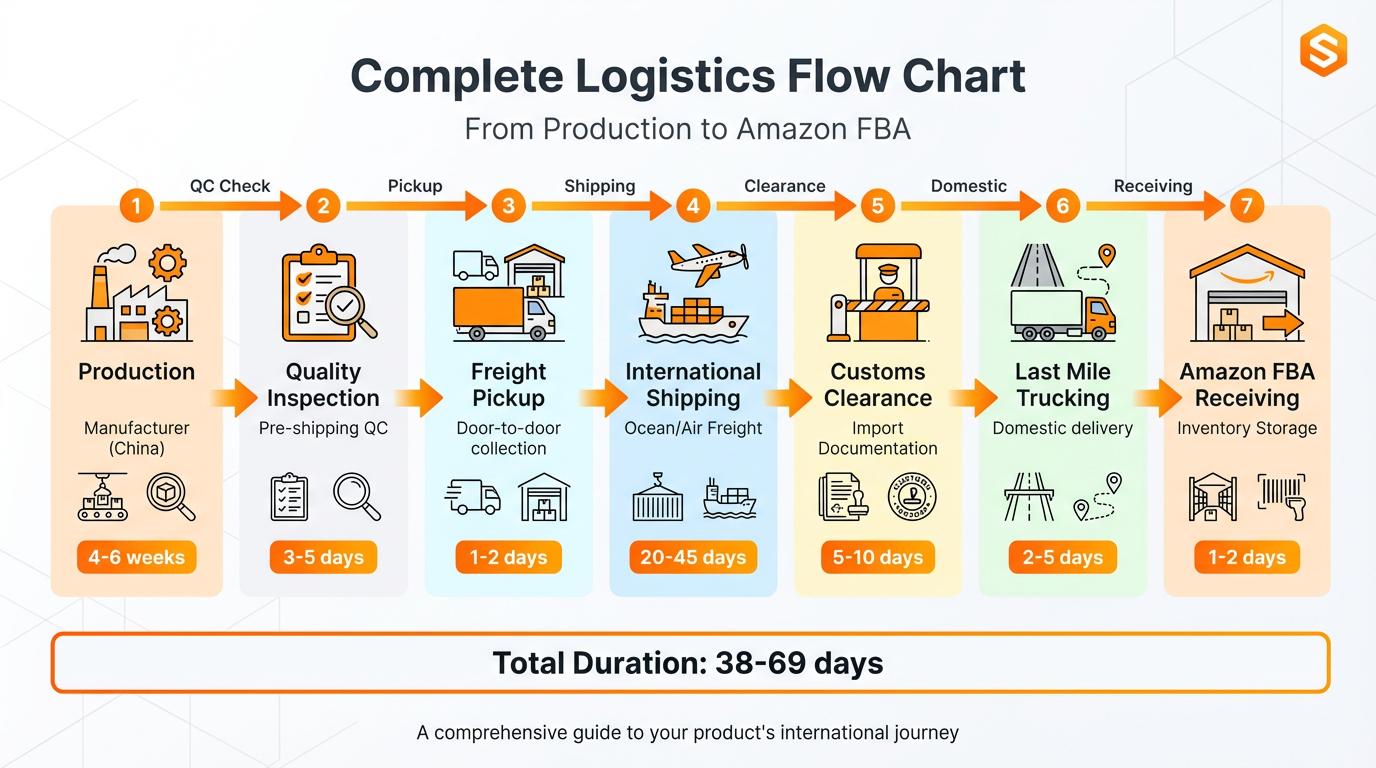
At a high level, shipping products to Amazon from production to FBA looks like this:
- Production finishes at the supplier
- Quality inspection (recommended for every order, mandatory mindset for first orders)
- Packaging, unit labels, carton labels, carton packing list
- Create a shipment plan in Seller Central and generate FBA box labels
- Pickup by freight forwarder or courier
- International transport (air, sea, or express)
- Customs clearance and duties
- Last mile delivery to Amazon fulfillment center (SPD, LTL, or FTL)
- Amazon receives, checks in, and the inventory becomes available
Pro tip
Inbound shipping gets much easier when you assign an owner to each step. Example: The supplier owns production and packaging photos, the inspection company owns the QC report, the forwarder owns customs and delivery appointments, and you own the shipment plan accuracy.
Step 1: Prepare products, packaging, and labels for FBA
1A. Confirm product prep requirements early
Before anyone packs cartons, confirm whether your ASIN needs special prep like poly bagging, bubble wrap, expiration date labels, or suffocation warnings. If you rely on Amazon to fix prep problems at receiving, you risk delays, unplanned service fees, or refusal. The safest workflow is to prep correctly before the shipment leaves the origin country.
1B. Decide who applies unit labels
For most private label sellers, you either:
- Use manufacturer barcodes (UPC or EAN) if eligible, or
- Use FNSKU labels (Amazon barcode labels) and make sure any other scannable codes are covered.
Common mistake
Printing unit labels too late. Sellers finish production, rush pickup, and then realize the factory did not label units consistently. Fixing labels after export is one of the most expensive "small mistakes" because it usually means relabeling labor at a 3PL, plus delays.
1C. Pack cartons like Amazon will receive them
Amazon receiving is optimized for predictable cartons. Your goal is clean labeling, accurate box content, and cartons that meet size and weight limits.
- Keep cartons consistent (case pack) whenever possible
- Use strong outer cartons and prevent internal movement
- Do not exceed standard carton limits unless your product qualifies as a single oversize item carton
1D. Do a simple inspection that prevents expensive returns
Even if you do not hire a full inspection company, do not skip quality checks entirely. At minimum, verify:
- Logo placement and packaging accuracy vs your approved sample
- Critical functions (zippers, switches, seals, chargers)
- Unit labeling and carton labeling consistency
- Carton count matches the packing list
Step 2: Create your FBA shipment in Seller Central
In 2025, most sellers create inbound shipments using the "Send to Amazon" workflow. The steps below keep you out of trouble when shipping directly to Amazon FBA from China or any overseas supplier.
2A. Build the shipment plan with the final ship from address
- Set your ship from address (supplier, 3PL, or forwarder warehouse)
- Choose case packed vs individual units
- Enter accurate box weights and dimensions
- Confirm packing and labeling responsibility
Common mistake
Creating a shipment with placeholder box sizes and then "fixing it later." Box weights and dimensions are not cosmetic. They affect partnered carrier options, appointment planning, and receiving. If you change cartons after labels are printed, you risk label-to-box mismatches.
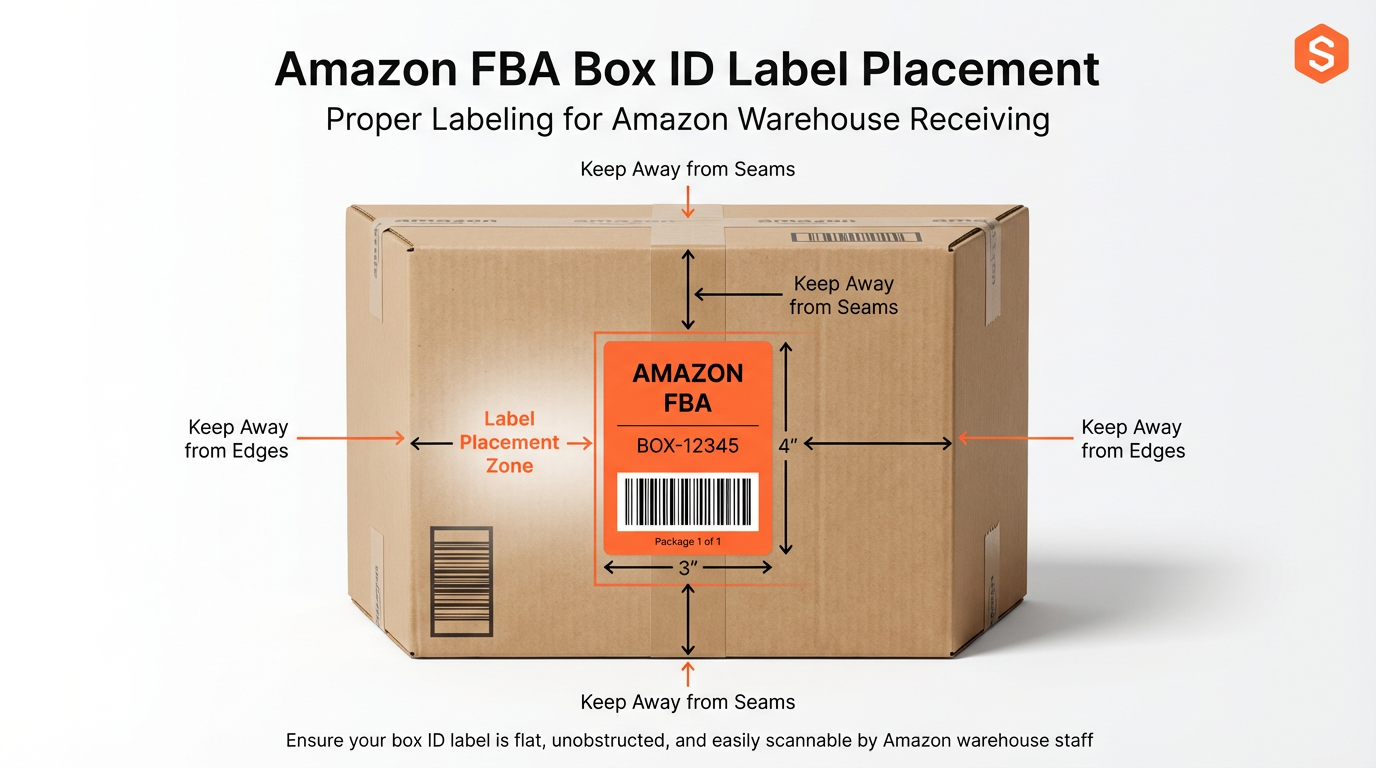
2B. Generate and apply the correct box labels
Print your FBA box ID labels from Seller Central and apply them to the correct cartons. If you provide box content information, each label is box-specific. Mixing labels across cartons is one of the fastest ways to trigger delays at receiving.
2C. Choose delivery type: SPD vs LTL or FTL
Your last-mile delivery method should match your shipment size:
- SPD (Small Parcel Delivery): typically cartons shipped via courier networks
- LTL: palletized freight on a shared truck
- FTL: full truckload, usually for large pallet counts
Run the landed cost before you ship
Before you confirm cartons and shipping method, calculate profit with realistic freight and duty. Use the free SellerSprite Profitability Calculator to estimate FBA fees, shipping cost per unit, and net margin so your first inbound shipment does not surprise you.
Step 3: Choose a shipping method from China or overseas to Amazon FBA
Most sellers use one of three options: express courier, air freight plus last mile, or sea freight plus truck. Your best choice depends on urgency, volume, and cash flow. If you are asking "how to ship to Amazon FBA from China," this is the section that will decide your cost per unit.
Pro tip
If you are launching a new ASIN, consider a split shipment. Send 10% to 30% by air to start selling and collect early data, then ship the remaining volume by sea to protect the margin.
Step 4: Documents, customs, and delivery to the Amazon FC
4A. Prepare the standard documents your forwarder will ask for
Your forwarder or broker typically needs:
- Commercial invoice
- Packing list (carton count, carton dimensions, weights)
- Bill of lading (sea) or air waybill (air)
- Importer of record details and tax IDs where required
- Any product compliance docs if your category needs them
4B. Customs clearance: do not guess the importer setup
Customs is where first shipments get stuck when sellers assume Amazon will "handle the import." In most cases, you (or your appointed partner) must be correctly listed for import compliance and duty payment. Build this into your forwarder conversation before pickup so the shipment does not stall at the port.
4C. Delivery appointment and check-in
Once cleared, the shipment moves to Amazon via SPD, LTL, or FTL. Your forwarder should confirm the delivery appointment requirements for the assigned fulfillment center and ensure the cartons or pallets match what you created in Seller Central.
After delivery, receiving time varies. Many shipments check in within a few business days, but delays happen during peak season or when labels and box contents are not clean.
Costs and timelines with a realistic example
Costs vary by season, carrier capacity, product type (batteries increase complexity), and destination. The goal here is not a perfect quote, but a realistic way to estimate per-unit shipping cost and avoid margin surprises.
Example scenario
A seller ships about 2 CBM of cartons from Shenzhen to an Amazon US fulfillment center area (example: Southern California region). The shipment is 18 cartons, with a total gross weight of 210 kg. For air freight, chargeable weight is often based on volume, so 2 CBM can be priced roughly as 330 to 340 kg chargeable weight, depending on the carrier's rules.
For this size, sellers often compare two options:
- Air freight plus delivery: often chosen for launch speed. A late 2025 all-in-door to FBA quote for a shipment like this can commonly land in a broad range, such as USD 1,700 to 2,600, depending on route, peak season, and whether duties are included. If the shipment contains 800 units, that is roughly USD 2.13 to 3.25 per unit just for inbound freight.
- Sea freight LCL plus truck: often chosen for margin. A door-to-FBA quote can be lower, but destination fees and trucking are the surprise factor. Time is usually 4 to 7 weeks door-to-door.
Pro tip
Do not evaluate shipping cost by total dollars. Evaluate it by cost per sellable unit. A shipment that is "cheap" but arrives late can still be expensive if you stock out and lose ranking.
Common mistakes that cause FBA delays or refusals
Here are the issues that most often create pain on first shipments:
Mistake 1: Box labels are missing, placed poorly, or mismatched
- Label placed on a corner or seam and becomes unreadable
- Supplier mixed box labels across cartons after repacking
- Old labels covered with tape and a scanner cannot read
Mistake 2: Cartons exceed standard weight or size limits
Overweight cartons trigger more than a fee risk. They can trigger refusal risk and shipment blocking warnings. Train your supplier to weigh cartons after packing, not before.
Mistake 3: Box content information is wrong or missing
Inaccurate box content info is one of the most common reasons a shipment takes longer to reconcile. If each label is box-specific, the contents must match that label.
Mistake 4: Shipment plan changes after labels are printed
Common mistake
Sellers change carton count after pickup. The supplier adds "just two extra cartons" or repacks cartons to reduce damage. If the shipment plan and labels do not match, receiving becomes slow and painful.
Shipping from China to Amazon FBA US and EU: key differences
Shipping from China to Amazon FBA in the US
- Common entry routes: air to major US airports, then delivery, or ocean to West Coast ports, then inland trucking
- Section 321: low-value duty-free entries have special rules and require correct consignee formatting if used
- Carton policies: accurate weights and dimensions and correct labels are strictly enforced
Shipping to Amazon FBA in the UK and EU
For EU and UK inbound, the biggest operational difference is the importer setup. Many sellers need an EORI number and VAT registration, depending on the import model. Your forwarder can handle customs, but they still need the correct legal setup from you.
- EU: EORI is generally required for customs clearance in the EU customs territory
- UK: UK EORI is generally required to import into Great Britain
- Time planning: add a buffer for customs and carrier appointment scheduling during peak season
Tools and checklists to simplify FBA shipping
Use SellerSprite to plan shipping volume and protect margin
- Before you ship, estimate profit and shipping cost per unit with the free Profitability Calculator.
- Use sales and demand signals to choose shipment size so you do not overstock and pay for long-term storage. If you are scaling your catalog, pair this workflow with your product research and tracking inside SellerSprite.
Pre-ship checklist (copy and paste)
Next step
If you want to scale shipping decisions with data, pair this inbound workflow with your broader FBA foundation. Continue with the course chapters inside SellerSprite Academy.
Share Your Sourcing Journey With SellerSprite Community
Join the SellerSprite community on the Facebook Group to share your sourcing journey, ask questions, and get support from fellow Amazon sellers.
FAQ
How much does it cost to ship products to Amazon FBA from China?
It depends on volume, route, season, and product type. The fastest way to estimate is to convert your shipment into cost per unit: (all in freight + duty + prep) divided by sellable units. For small shipments, express is simple but expensive. For medium shipments, air plus delivery is often the best balance. For large shipments, sea plus truck usually wins on margin.
How long does Amazon FBA receiving and check-in usually take?
Receiving time varies by fulfillment center workload and shipment quality. Clean labels, correct box content info, and cartons within limits usually check in faster. Peak season and mismatches can slow reconciliation.
Can I ship directly from my Chinese supplier to Amazon FBA?
Yes, many sellers do. The key is process control: your supplier must follow your prep and labeling rules, and your forwarder must handle customs and appointment delivery correctly. For first shipments, many sellers route through a forwarder warehouse to verify cartons and labels before final delivery.
What are the most common reasons Amazon refuses FBA shipments?
Missing or incorrect box labels, cartons exceeding weight or size limits, and shipment plan mismatches (carton count, contents, or prep). These are usually preventable with a strict pre-ship checklist.
Should I use a freight forwarder or let the supplier ship?
For very small test shipments, supplier shipping can work if they are experienced with Amazon labels and carton rules. For most sellers and any meaningful volume, a forwarder reduces risk because they can manage customs, appointments, and last-mile coordination.
How do I choose how much inventory to send in my first shipment?
Base it on realistic sales velocity and lead time. If your sea lead time is 40 days door-to-door, build enough buffer to avoid stockouts. Use the SellerSprite Profitability Calculator to see how shipping cost per unit impacts margin at different shipment sizes.
View The SellerSprite Course Directory
Ready for the next step? Open the SellerSprite Academy course directory to continue building your Amazon FBA skills chapter by chapter.
About the author
SellerSprite Team. SellerSprite is an Amazon seller platform used by 1.6M plus registered sellers worldwide, with 700K plus browser extension installs, refined over 8 plus years of product and workflow iteration. We publish step-by-step playbooks to help sellers move from product validation to supplier execution with fewer avoidable mistakes.
References
- Amazon Seller Central: Create shipments with Send to Amazon
- Amazon Seller Central: Shipping label requirements (FBA box ID labels)
- Amazon Seller Central: Product packaging requirements
- Amazon Seller Central: Shipping and routing requirements (box size and weight limits)
- Amazon Seller Central: Prepare your products for FBA shipping
- Amazon Seller Central: Delivering imports to Amazon (Section 321 notes)
- U.S. Customs and Border Protection: Basic importing and exporting
- European Commission: EORI number overview
- GOV.UK: Get an EORI number
- Amazon Seller Central Europe: EORI and VAT importer setup (Amazon Global Logistics help)