Shipping can feel like a wall of confusing terms at first. In this chapter, you will turn that confusion into a simple decision system you can repeat for every order.
You will learn how trade terms (Incoterms) split responsibilities, how to choose air or sea shipping, when to use a freight forwarder, and how to plan for bonds, duties, tariffs, and customs delays. You will also build a cost and timeline plan using SellerSprite Seller Tools to make decisions with confidence.
Key Takeaways
- Incoterms are a responsibility split: they define who pays for what and who manages each part of the shipment.
- DDP is the simplest: it is often the most stress-free option for beginners because duties and delivery are handled end to end.
- Air and sea both have "faster" and "standard" lanes: your best choice depends on cash flow, urgency, and inventory risk.
- Plan total landed cost: product cost is only the beginning. Use SellerSprite Seller Tools to model all shipping, duties, tariffs, and time buffers.
Table of Contents
Lesson Goals and Outcomes
What you will be able to do after this chapter
- Explain what EXW, FOB, DDU, DAP, and DDP mean in plain English.
- Choose an air or sea option based on urgency, budget, and inventory risk.
- Decide when a freight forwarder is worth it using a simple weight rule.
- Estimate landed cost using SellerSprite Seller Tools so your pricing and reorder decisions are realistic.
- Build a basic plan for duties, tariffs, and possible customs delays.
When you understand shipping terms, you protect your cash flow, avoid surprises, and scale faster with confidence.
Incoterms and Trade Terms Made Simple
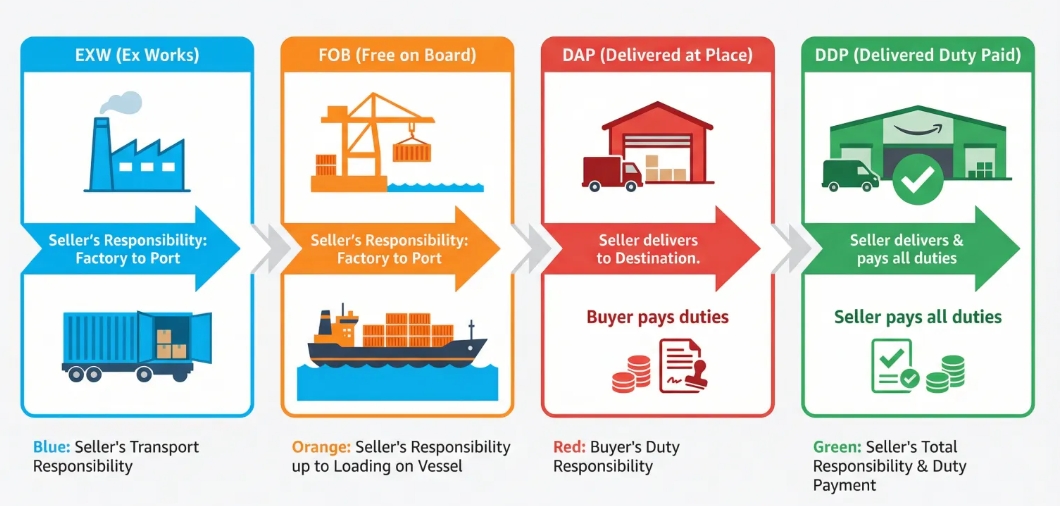
Incoterms are trade terms that define the division of responsibility in shipping. When a supplier quotes a price, the Incoterm specifies what is included and what is not.
EXW: You own the shipment responsibility
With EXW, your supplier quotes only the product cost at the factory. Shipping the product from the factory to Amazon is your responsibility. This can be clean and cost-effective if you have reliable shipping partners and want full control.
FOB: Supplier handles delivery to the departure port
With FOB, the supplier covers the cost and coordinates the delivery of your goods to the nearest port. From that point forward, you manage the shipment to Amazon, including import processes and final delivery.
DDU and DAP: Delivery arranged, duties not included
DDU and DAP are convenient, but duties and import fees are not included, which can lead to customs delays and surprise invoices.
Important for Amazon deliveries: Avoid terms that charge the receiver a delivery fee. Amazon warehouses will not accept cartons that require payment on receipt.
DDP: The simplest option for beginners
DDP delivers with duties paid. You pay an all-inclusive quote, so your shipment arrives without last-minute customs payments. While not always the cheapest, it is often the lowest stress for beginners.
Air v.s. Sea Shipping and Split Shipment Strategy
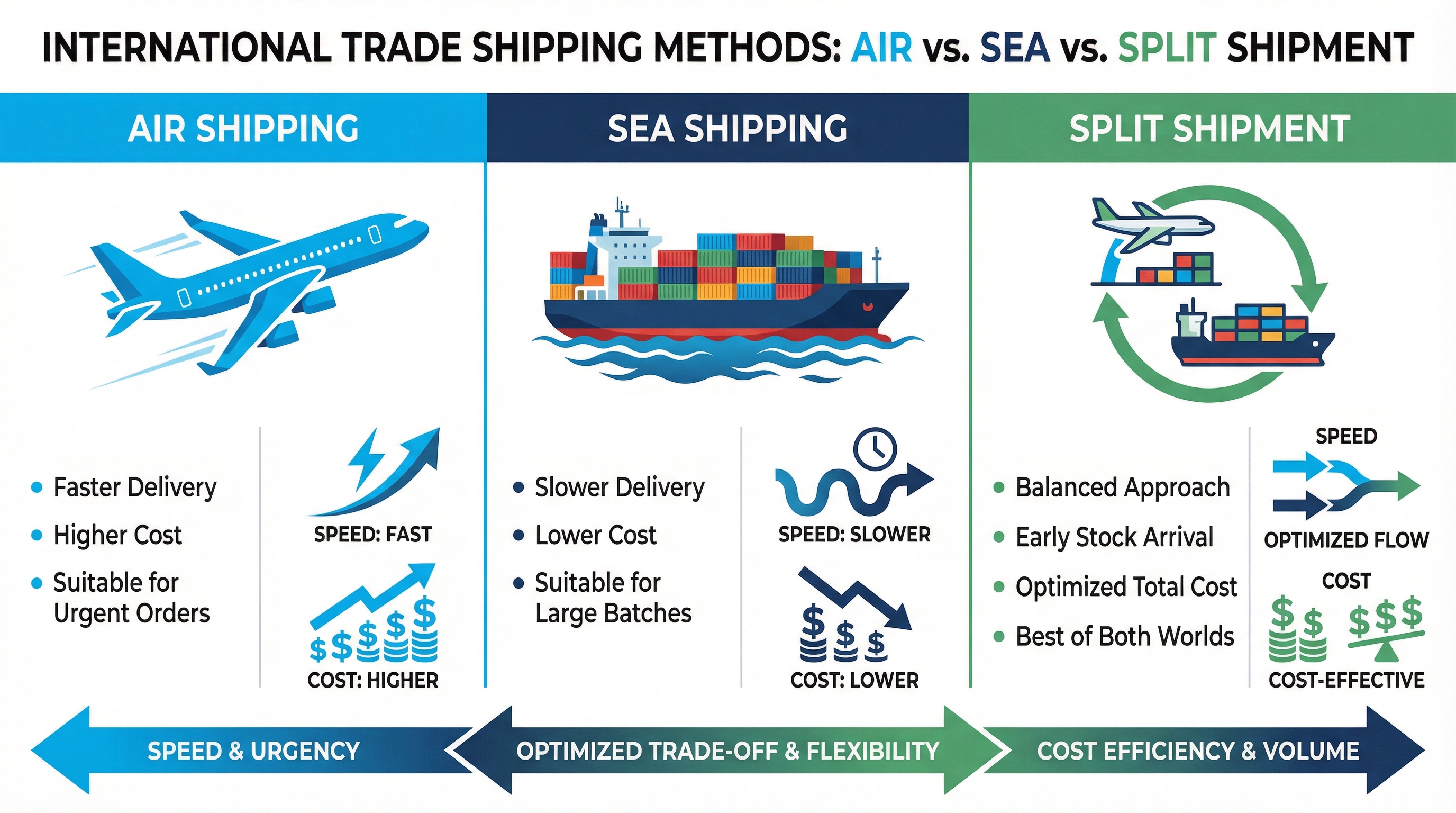
After you choose trade terms, you choose the shipping mode. Think of it as a balance between speed, cost, and inventory risk. Your best choice depends on how fast you need stock to arrive and how much cash you can tie up.
Air shipping: Express v.s. standard lanes
- Air express: The fastest option, with transit times of 3 to 5 days depending on the route and processing.
- Air standard: Slower, more affordable, with typical transit times of 7 to 15 days due to consolidation and customs.
- Best use: First orders, urgent restocks, or when you need data quickly to validate demand.
Sea shipping: Faster lanes v.s. standard lanes
- Faster sea lane: Often 18-25 days depending on route and capacity.
- Sea standard lane: Usually 25-35 days; can take longer in peak season.
- Best use: Bigger replenishment batches when your sales cadence is stable.
The split shipment strategy (recommended)
Split orders into two: send a small air batch to start selling quickly, and the rest by sea to lower total costs and avoid storage fees.
SellerSprite workflow tip: Use SellerSprite's Sales Estimator to estimate early demand, set your air batch to cover initial sales, and let your sea batch follow, creating a predictable pipeline for shipments.
Do You Need a Freight Forwarder
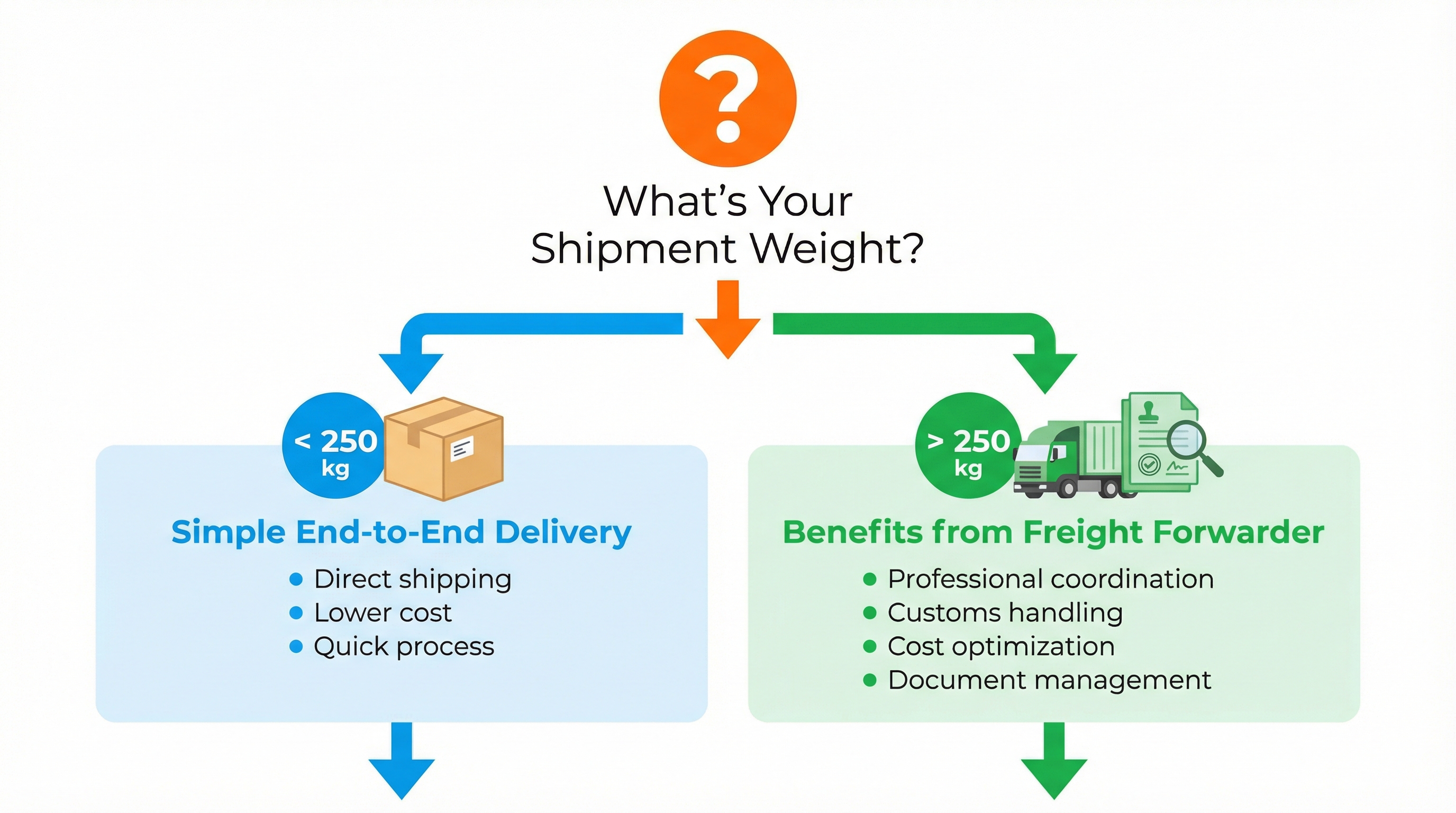
Freight forwarders coordinate shipping from your supplier to the final destination. They can manage packing coordination, transportation booking, customs documentation, handling of import fees, and delivery to Amazon fulfillment centers.
When a freight forwarder is worth it
- Rule of thumb: Consider a freight forwarder when the total shipment weight is above about 250 kg.
- Why: forwarders often charge a fixed service fee. As your shipment grows, that fee becomes smaller per unit.
- Extra value: they reduce errors in customs documents and can help you avoid delays.
Avoid double-paying by matching terms correctly
If you hire your own shipping partner to manage end-to-end delivery (often DDP), then keep your supplier product quote as EXW so responsibilities are clear. If your supplier's quote already includes port delivery (e.g., FOB), confirm you are not paying for that step twice.
Freight forwarder checklist (simple and practical)
- Confirm they can deliver to Amazon fulfillment centers and follow appointment and labeling requirements.
- Ask what is included in the quote: pickup, export, customs, duties, delivery, and insurance.
- Ask for the expected timeline range and what causes delays.
- Confirm how duties and tariffs are handled: prepaid or billed later.
- Request a clear document checklist for your shipment.
Bonds, Duties, Tariffs, and Customs Holds
Import costs can look intimidating, but they become manageable when you treat them as a predictable checklist. The goal is to forecast these costs before you place a large order.
Bonds: your right to import
A bond is a requirement for importing into certain countries, including the United States. It is essentially the permission structure for importing goods. Bonds can be annual or per shipment, depending on your situation.
Duties: tax based on product type
Duties depend on your product. Ask your supplier for the HS code range they believe best matches your product, then validate it with a customs professional to ensure your estimate is realistic.
Tariffs: an additional layer that can change
Tariffs are an extra tax layer that can change over time. This is why you should build a buffer into your landed cost model and avoid strategies that only work when taxes are unusually low.
Customs holds: why some products are inspected more
Some products are more likely to be inspected at customs, such as items with batteries, flammable components, ingestibles, or other sensitive materials. Inspections can be quick (e.g., scanning) or slower (manual inspection), which can introduce significant delays.
Beginner safety rule: If your product is likely to trigger extra customs scrutiny, build a bigger time buffer and avoid running too close to stockout.
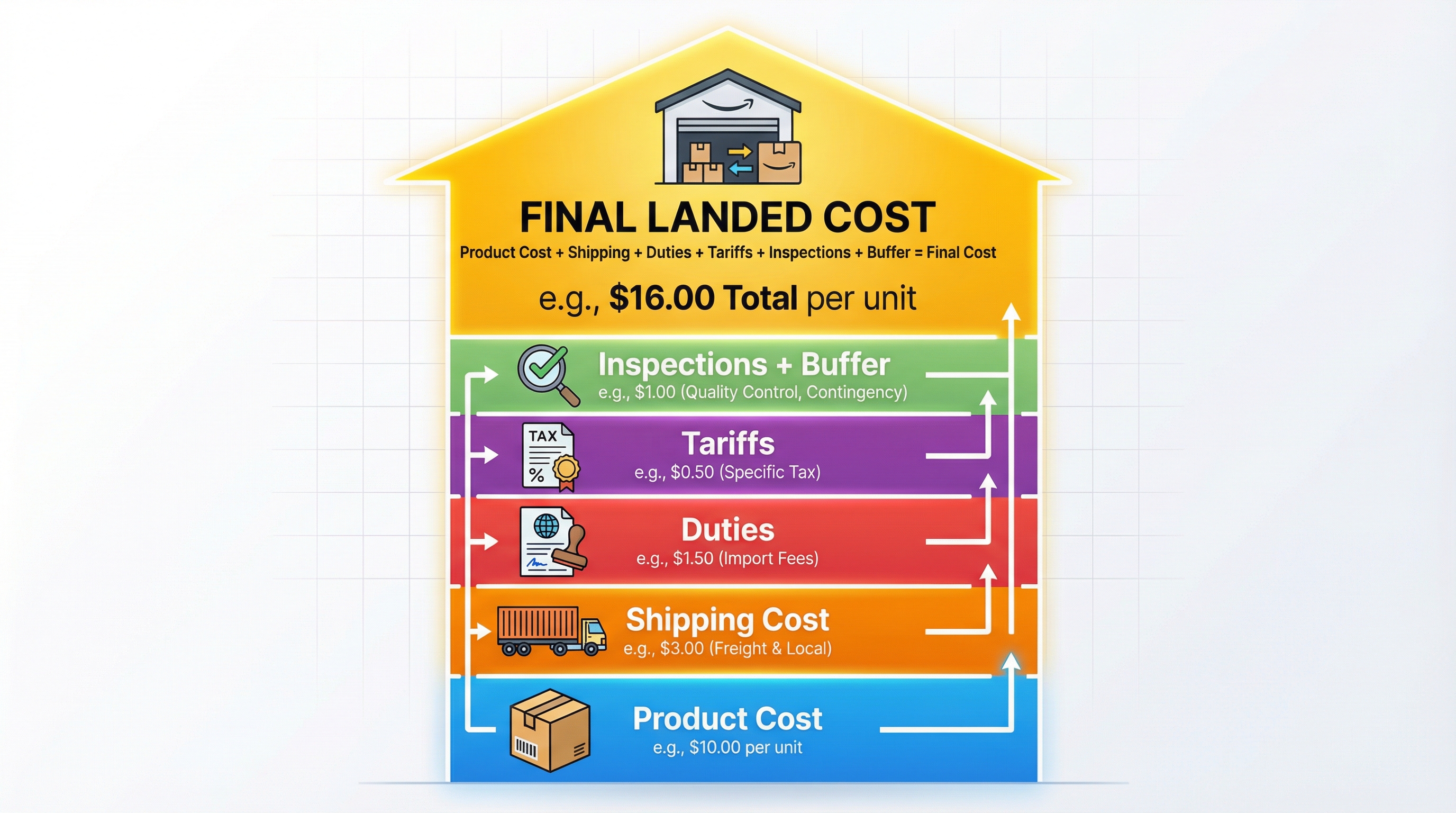
Build landed cost with SellerSprite Seller Tools
- Use SellerSprite Seller Tools to estimate demand and expected monthly sales so you know your reorder pace.
- Enter product cost, shipping quote, and packaging prep costs into your cost model.
- Add duty and tariff estimates as separate line items to stress-test profitability.
- Add a buffer for delays and cost variability, then confirm the product still meets your margin target.
- Use your forecasted sell-through to determine air, sea, or split-shipment quantities.
Shipping to Canada and Other Countries
When you ship to countries outside the United States, requirements can vary based on your business location, registration status, and product category. Many rules are similar, but the details can vary.
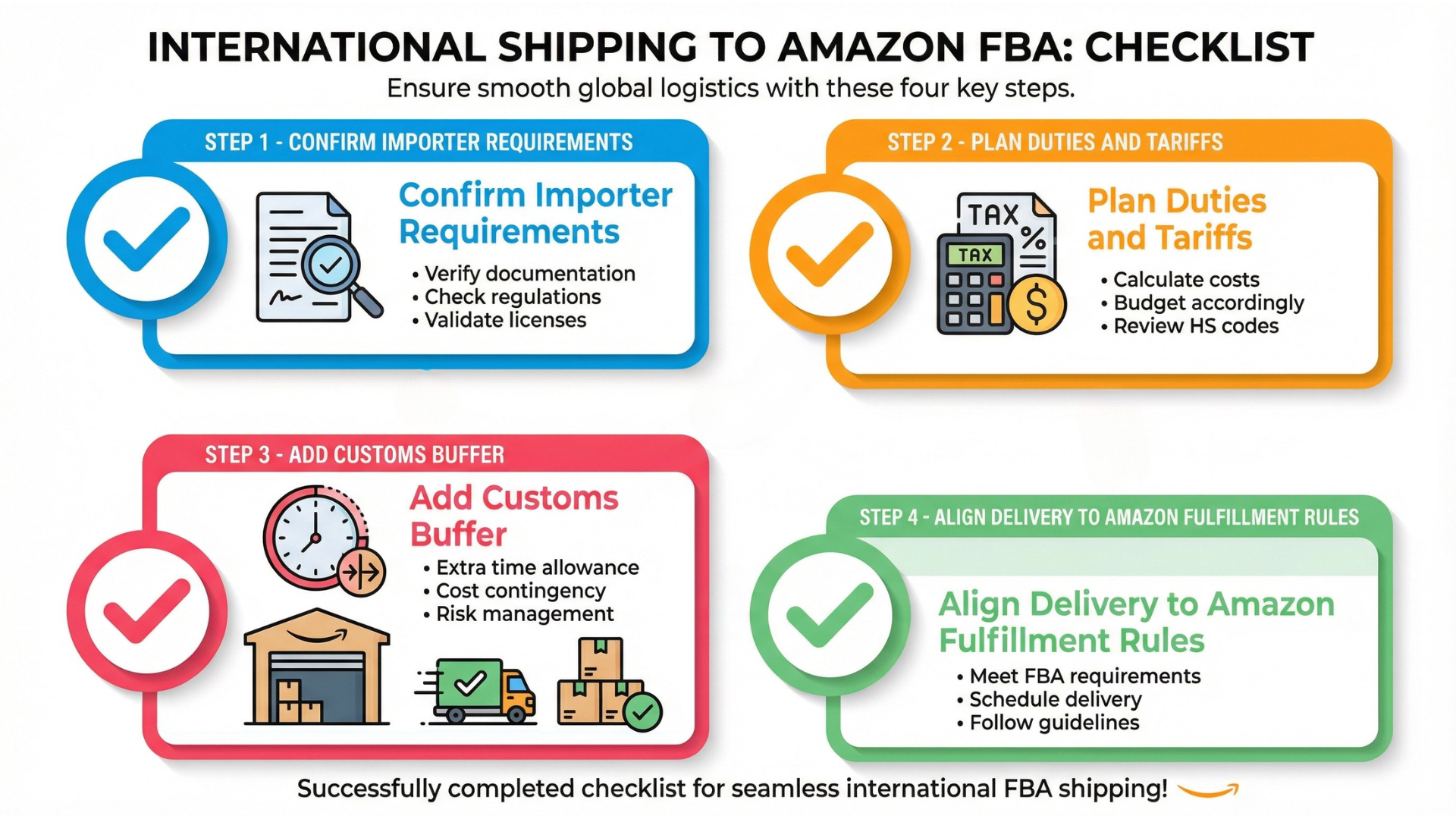
International shipping checklist (keep it simple)
- Confirm import requirements for the destination country, including business registration needs.
- Validate whether you need specific tax IDs or an importer of record setup.
- Build a bigger time buffer for customs and carrier handoffs.
- Use SellerSprite Seller Tools to plan inventory to avoid stockouts caused by delays.
FAQs
Q: What does EXW mean in a supplier quote?
A: EXW means the quote covers production only. Shipping from the factory to Amazon, plus customs and delivery, are handled by you or your shipper.
Q: Is FOB better than EXW?
A: Not always. FOB can be easier because the supplier handles delivery to the port. EXW can be cleaner if your shipper picks up from the factory and manages everything end to end.
Q: Why should I avoid DAP with Amazon warehouse delivery?
A: If duties are collected on delivery, Amazon may refuse the shipment. You want a setup where duties are paid before delivery or fully managed by the shipper.
Q: What is the safest option for beginners?
A: Many beginners prefer DDP because duties and delivery are bundled and managed, which reduces customs interruptions and surprise invoices.
Q: Should I ship my first order by air or sea?
A: For many launches, air is safer because it reduces the time to first sales and feedback. Once demand is stable, sea often becomes the cost efficient choice.
Q: How do I estimate duties and tariffs?
A: Start by getting the product classification code from your supplier, then estimate duties as a percentage of declared value. Add expected tariffs, fees, and a buffer for inspections.
Next Steps and SellerSprite Support
Your next win is action. Pick one shipment plan for your next order, write down the term you will use, and confirm the responsibilities in writing. If you get stuck, ask inside the SellerSprite community. You will learn faster when you can compare notes with other sellers.
Share Your Sourcing Journey With SellerSprite Community
Join the SellerSprite community on the Facebook Group to share your sourcing journey, ask questions, and get support from fellow Amazon sellers.
View The SellerSprite Course Directory
Ready for the next step? Open the SellerSprite Academy course directory to continue building your Amazon FBA skills chapter by chapter.
About the author
The SellerSprite Team is composed of experienced Amazon sellers, ecommerce operators, and data analysts. We build practical training and Seller Tools that help you move faster, reduce mistakes, and scale with clarity.