- Amazon FBA lets sellers outsource storage, packing, shipping and returns to Amazon, making listings Prime‑eligible and improving customer trust[1][2].
- FBA fees include per‑unit fulfillment charges (often around $3.06–$5.80 for typical standard‑size items depending on weight and season) and monthly storage fees that range from about $0.78 to $2.40 per cubic foot depending on the time of year[3].
- Advantages include Prime customer access, a better chance to win the Buy Box, higher sales and hands‑off logistics[1][2]; disadvantages include fees, limited branding control and potentially higher return rates[2].
- Getting started involves creating a selling plan, enrolling in FBA, listing products and sending inventory to Amazon fulfillment centers[1].
- Evaluate whether FBA suits your business by calculating margins and considering product size, turnover and brand strategy.
Quick answer: Amazon’s Fulfillment by Amazon (FBA) program handles storage, packaging, shipping and customer service on your behalf.[1] Enrolling your products in FBA gives you Prime eligibility and hands‑off logistics, opening the door to Amazon’s vast customer base and improving conversion rates.[2] However, you pay per‑unit fulfillment charges and monthly storage fees that vary by product size, weight and season.[3]
What is Amazon FBA?
Definition
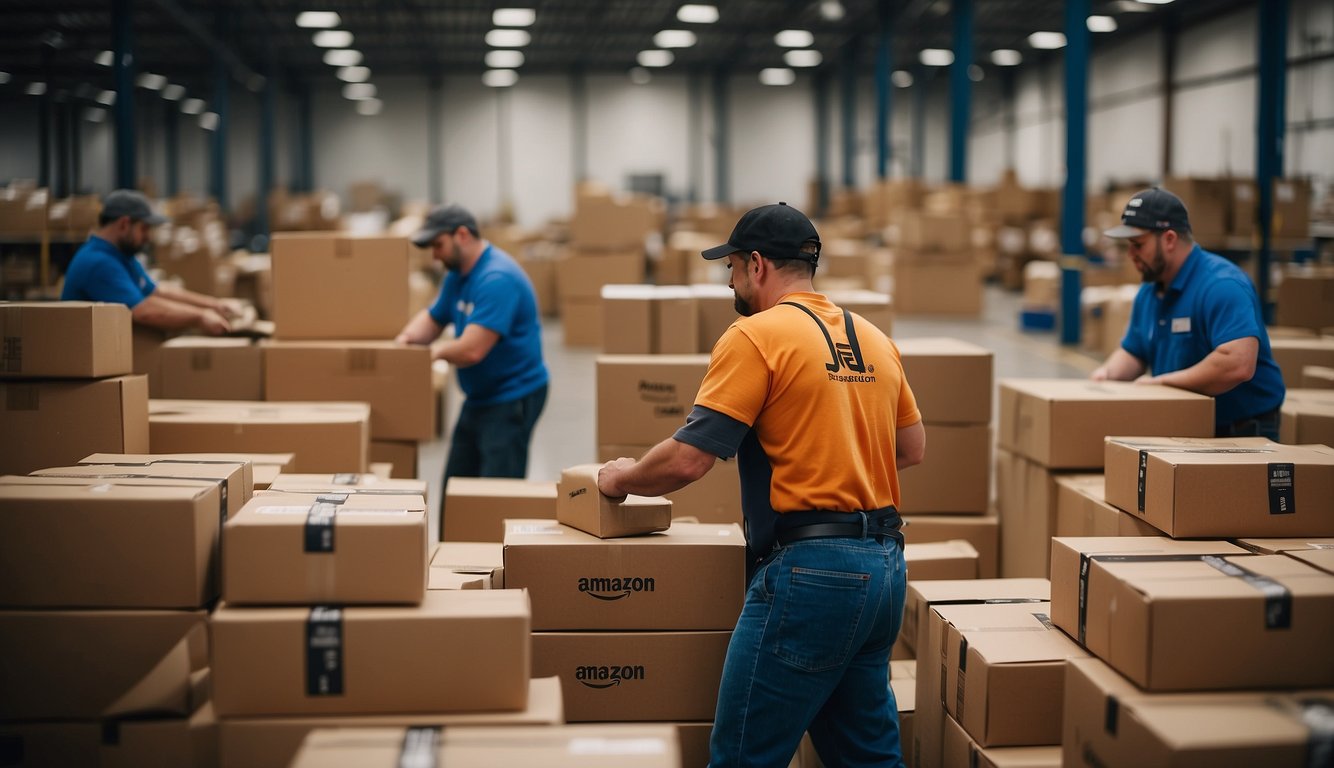
Fulfillment by Amazon (FBA) is a program that lets sellers outsource order fulfillment to Amazon. Products enrolled in FBA are stored in Amazon’s warehouses; when orders arrive Amazon staff pick, pack, ship and deliver them to customers, and Amazon handles returns and customer service as part of its supply‑chain offering.[1]
Why it matters
FBA matters because it allows small and large sellers to offer Prime‑eligible products without building their own logistics network. Fast shipping and Prime badges increase buyer trust and can improve conversion rates. By outsourcing logistics and returns, sellers can focus on product development and marketing instead of warehouse operations.
How it works
After registering for a selling plan, you enroll products in FBA, list them on Amazon and ship inventory to Amazon fulfillment centers. Amazon stores the inventory until a customer places an order. When orders are placed, Amazon picks, packs and ships the products, and handles any returns and customer service as part of the fulfillment process.[1]
Examples
FBA serves a wide range of businesses. For example, consumer electronics brand Anker used FBA to provide rapid fulfillment and leverage customer reviews to inform product improvements, helping it grow from a start‑up to a multi‑brand powerhouse.[4] Industrial equipment seller Vevor used FBA to offer Prime shipping on heavy equipment, allowing business buyers to receive bulky products quickly and reliably and proving that B2B sellers can thrive on a consumer‑focused marketplace.[4]
Misconceptions
- FBA is passive income. While FBA handles logistics, sellers must still research products, optimize listings and manage advertising to be profitable.
- FBA eliminates all fees. You still pay referral fees, fulfillment fees and storage fees, and these costs can erode margins if not managed carefully.[2]
- Every product benefits from FBA. Oversized or low‑margin items may be cheaper to fulfill yourself or via a third party.
Amazon fulfilment: Pros & cons
Understanding the pros and cons of FBA helps you decide whether to outsource fulfillment or keep operations in‑house. Below are some key points based on recent seller insights.
Pros
- Prime customer access: FBA makes your listings eligible for Amazon Prime, giving you exposure to millions of Prime members and increasing conversion rates.[1][2]
- Buy Box advantage: Amazon’s algorithm favors FBA sellers when deciding who wins the Buy Box, increasing your product’s visibility and making it easier for shoppers to add your item to their cart.[1]
- Higher sales: FBA sellers often see higher conversion rates than non‑FBA sellers because Prime shipping improves customer trust and reduces buying friction.[1]
- Brand trust: The FBA badge signals that Amazon will handle delivery and returns, boosting shopper confidence and encouraging repeat purchases.[2]
- Hands‑off logistics: Amazon manages inbound shipments to its warehouses and takes care of packing, shipping, customer service and returns, so you can focus on sourcing and marketing.[1][2]
- Product storage and multichannel options: FBA provides access to Amazon’s network of fulfillment centers and offers multi‑channel fulfillment so you can use the service to ship orders from other platforms like Shopify or WooCommerce.[2]
Cons
- Fulfillment fees: Per‑unit fees and storage costs can reduce margins, especially for slow‑moving or low‑priced items.[3]
- Branding limitations: Amazon controls packaging and unboxing, which can limit your ability to create a branded customer experience.[2]
- Less control: You relinquish control over shipping methods and inventory handling, making it difficult to implement unique fulfillment practices.[2]
- Higher return rates: Prime shoppers may return items more frequently because of generous return policies, increasing reverse‑logistics costs.[2]
Advantages & Disadvantages of FBA
The following table summarizes key advantages and disadvantages of using FBA. It focuses on keywords and short phrases for quick reference.
| Advantages | Disadvantages |
|---|---|
| Prime eligibility; Buy Box boost; Higher conversion; Customer trust; Multichannel fulfillment | Per‑unit fees; Storage costs; Limited branding control; Increased returns; Less operational control |

How to get started with Amazon FBA
Starting an FBA business involves a few straightforward steps. Amazon allows sellers to enroll whether they have an Individual or Professional selling plan.
- Create a selling plan: Sign up for an Individual or Professional plan via Seller Central. A Professional plan is often recommended if you sell more than 40 items per month.
- Register products for FBA: Enroll your SKUs in FBA, decide which items you want Amazon to fulfill and prepare to send inventory.
- List and prep products: Create optimized product listings with clear images and keywords. Follow Amazon’s preparation and packaging requirements to avoid inbound defects.
- Ship to Amazon: Send your inventory to designated fulfillment centers. Amazon will store the products until they sell.
- Monitor performance: Use Seller Central tools to track inventory levels, sales and customer feedback. Adjust pricing and advertising strategies as you learn.
How much does Amazon FBA cost?
FBA costs consist of several components: per‑unit fulfillment fees, monthly storage fees, referral fees and optional services. Fees vary by size tier, weight, product category and season. Below are examples of typical charges for non‑apparel products in the United States.
- Per‑unit fulfillment fees: Amazon charges a per‑unit fee that covers picking, packing, shipping and customer service. For non‑apparel items, small standard products weighing 2 oz or less cost about $3.06 per unit to fulfill, while items up to 1 lb range from about $3.15 to $3.65. Large standard items (1–2.5 lb) cost roughly $5.52–$5.80, and heavier items cost $6.45 plus $0.08 per 4 oz above 3 lb.[3]
- Storage fees: Amazon charges monthly storage based on cubic footage. Standard‑size inventory costs about $0.78 per cubic foot from January through September and $2.40 per cubic foot in October–December. Oversize products cost approximately $0.53 per cubic foot during most of the year and $1.40 during peak season.[3]
- Referral and other fees: Amazon collects a category‑based referral fee (typically 8–15%) and charges for optional services like labeling or removal orders. Use SellerSprite’s FBA Calculator to estimate total costs before enrolling products.
Because fees fluctuate by size, weight and time of year, run profitability calculations on each SKU. For many products, FBA fees range between 15% and 30% of the selling price before accounting for cost of goods.

Is FBA right for you?
Whether FBA is the right fulfillment method depends on your product mix, margins and business goals. FBA can be more cost‑effective for sellers who ship higher volumes, but every situation is different. Consider the following factors:
- Product size and weight: Small, light items often benefit most from FBA. Oversized or heavy items incur higher fees and may be cheaper to fulfill yourself.
- Sales velocity: Fast‑moving products turn over quickly, minimizing storage costs. Slow‑moving items can accumulate monthly storage fees and aged‑inventory surcharges.
- Branding requirements: If you rely heavily on branded packaging and customer experience, FBA’s standardized packaging may not fit your strategy.
- Operational capacity: Businesses without warehouse infrastructure can leverage FBA to scale quickly. Those with established logistics may prefer fulfilled-by-merchant (FBM) to retain control.
- Margin calculations: Use Amazon’s revenue calculator to compare profit margins for FBA versus other fulfillment methods before making a decision.
Amazon FBA case studies
Real‑world examples illustrate how FBA can accelerate growth or open new markets. The following two examples are based on documented success stories from established brands.
Example 1: Anker Innovations
Electronics brand Anker began as a small startup selling portable chargers. Founder Steven Yang focused on superior product quality and used Amazon’s FBA program to ensure fast, reliable delivery. Rapid fulfillment and access to customer reviews enabled Anker to gather feedback and refine products, helping the company grow into a multi‑brand powerhouse.[4]
Example 2: Vevor
Industrial equipment seller Vevor leveraged FBA to offer Prime‑eligible delivery on large, heavy machinery. By providing fast, reliable shipping and detailed product information, Vevor bridged the gap between B2B buyers and consumer‑grade convenience and scaled quickly in a niche dominated by slow, offline supply chains.[4]

How to grow an FBA business
Once your FBA store is up and running, growth comes from optimizing products, operations and marketing. Consider these strategies:
- Invest in product research: Use data‑driven tools to find high‑demand, low‑competition products and avoid saturated categories.
- Build a strong brand: Even within FBA’s standardized packaging, you can differentiate through high‑quality products, clear positioning, and consistent imagery and copy.
- Optimize listings: Implement SEO best practices—use relevant keywords, compelling titles and descriptive bullet points. High‑quality images and A+ Content improve conversion.
- Monitor fees and margins: Regularly audit fulfillment and storage fees. Small changes in dimensions or weight can push items into higher fee tiers.
- Manage inventory health: Maintain optimal stock levels to avoid both low‑inventory surcharges and aged‑inventory fees. Consider Amazon Warehousing and Distribution (AWD) for bulk storage with lower surcharges.
- Leverage advertising and analytics: Use Amazon Ads, Sponsored Products and external traffic to drive visibility. Analyze performance data to refine bids and keywords.
- Expand multichannel: FBA can fulfill orders from other marketplaces like Shopify or Walmart. Expanding your presence can diversify revenue streams.
Explore more resources on SellerSprite’s blog. Learn about the pros and cons of FBA and discover the best Amazon seller tools to support your growth. These guides offer deeper insights and practical tips tailored to FBA sellers.
Level up your Amazon strategy with SellerSprite
SellerSprite’s suite of tools helps you research profitable products, cluster long‑tail keywords and monitor competitors so you can make smarter decisions and improve your FBA profitability.
Next steps
- Use Amazon’s revenue calculator or SellerSprite's FBA Profit Calculator to estimate fulfillment and storage costs for your products, and decide whether FBA fits your margin goals.
- Set up a selling plan, enroll your products in FBA, and optimize your listings with relevant keywords and compelling copy.
- Leverage tools like SellerSprite to research keywords, track competitors and plan advertising campaigns to scale your FBA business.
Quick recap
If you want reliable progress, prioritize relevance, cluster long‑tail variants, and map keywords to the right listing sections before scaling ads.
FAQs
Is Amazon FBA the same as Fulfilled by Merchant (FBM)?
No. FBA means Amazon stores and ships your products, while FBM requires you to handle storage, packing and shipping yourself. FBA can make your listings Prime‑eligible but introduces fulfillment and storage fees.
Do I need a Professional selling plan to use FBA?
You can use FBA with either an Individual or a Professional selling plan. Sellers shipping higher volumes may find a Professional plan more cost‑effective, but you can start with either depending on your needs.
How long does it take to start selling with FBA?
Once you create a seller account and prepare your inventory, you can list products and ship them to Amazon. Processing times vary by carrier and Amazon’s inbound capacity, but many sellers are operational within a few weeks.
Can I use FBA for products sold on other platforms?
Yes. FBA offers Multi‑Channel Fulfillment that allows you to fulfill orders from other marketplaces like Shopify, BigCommerce or your own website.
What happens if my products don’t sell quickly?
Inventory that sits for months accrues storage fees. Amazon’s aged‑inventory surcharges can significantly reduce margins on slow‑moving items, so it’s important to maintain healthy turnover and monitor storage time.
Is FBA worth it for low‑priced items?
Products under $10 may qualify for Amazon’s Low‑Price FBA program, which offers discounted fulfillment fees. However, you should still factor in storage and referral fees to ensure profitability.
How can I minimize FBA fees?
Accurate product dimensions and weights help you avoid being placed in higher size tiers. Efficient packaging, proper labeling and regular inventory audits reduce errors, while using programs like low‑price FBA or Amazon Warehousing and Distribution can lower certain fees.
Does FBA guarantee higher sales?
FBA can increase visibility and conversion rates, but success still depends on product quality, keyword optimization and competitive pricing. Consider FBA as part of a broader strategy rather than a guarantee of success.
Can I switch a product back to FBM after using FBA?
Yes. You can change fulfillment methods by creating a new FBM SKU or removing inventory from Amazon. Removal fees apply, so calculate the costs before switching.
References
- McKay. (2026, January 2). FBA vs FBM: What’s the difference and which sells more? Five Star Commerce. https://fivestarcommerce.com/fba-vs-fbm-whats-the-difference-and-which-sells-more-updated-for-2026/.
- Carter, D. (2024, September 16). Is FBA Amazon worth it? A balanced review. Aura. https://goaura.com/blog/is-fba-amazon-worth-it.
- Zhou, Y. (2026, January 30). 2026 Amazon FBA pick and pack fees explained for sellers. Webgility. https://www.webgility.com/blog/amazon-pick-and-pack-fee.
- Ecom Brainly Admin. (2025, December 24). 10 Amazon seller success stories to inspire your 2025 strategy. Ecom Brainly. https://ecombrainly.com/amazon-seller-success-stories/.
About the author
Fiona is a senior content strategist and former Amazon seller with over 8 years of experience in e‑commerce and digital marketing. She has built and optimized hundreds of Amazon FBA listings and guides SellerSprite users to improve their rank through data‑driven keyword research. Her work is regularly reviewed by SellerSprite’s product and compliance teams to ensure accuracy and trustworthiness. Learn more at SellerSprite.